

A commercial entrance has to do more than keep unwanted visitors out. It needs to welcome customers, support staff access, withstand daily use and present the right image for your business. Well-planned commercial entrance security solutions bring these requirements together, rather than treating security as an afterthought once a break-in or damage has occurred.
For Canberra businesses, the right approach depends on the premises. A street-facing shop has different needs to a warehouse in Hume, a medical practice, office suite, school or strata-managed building. The entrance layout, operating hours, foot traffic, valuables on site and exposure to weather all affect the most suitable solution.
Start with the way your entrance is used
Before choosing a security door, shutter or lock, consider how people move through the entrance each day. An entry used by customers from 9am to 5pm needs to remain inviting and accessible during trading hours. A delivery entrance may require stronger hardware, wider clearances and a system that can cope with frequent opening. Staff-only access points may need tighter control than the public-facing front door.
It is also worth looking beyond the door leaf itself. The frame, hinges, glazing, sidelight windows, locking points and nearby access paths can all affect the security of an entrance. A quality lock on a weak frame will not provide the level of protection a commercial property owner expects.
Argus’ offers on-site assessments to helps identify these details early. We can also help you avoid buying a product that does not suit the opening, workflow or building appearance.
Commercial entrance security solutions for layered protection
The most effective entrance security usually comes from combining physical barriers with dependable access hardware. This creates layers that discourage opportunistic crime, delay forced entry and give authorised people practical access.
Security doors that protect without closing off the premises
Commercial security doors are often the first consideration for shops, offices and customer-facing businesses. They can provide a substantial physical barrier while maintaining ventilation, sightlines and a professional appearance. The right design should complement the building.
For some businesses, a hinged security door is the practical choice for a secondary entrance, staff door or tenancy access point. Sliding doors may suit wider openings, while custom-made options can address unusual dimensions or heritage-style façades. Material selection, mesh type, frame strength and locking configuration should be matched to the level of risk and the intended use of the door.
A busy entrance needs durable components. Doors that are difficult to operate, sagging on hinges or fitted with poor-quality closers soon become a security and maintenance issue. Professional measurement and installation matter as much as the product specification.
Roller shutters for after-hours protection
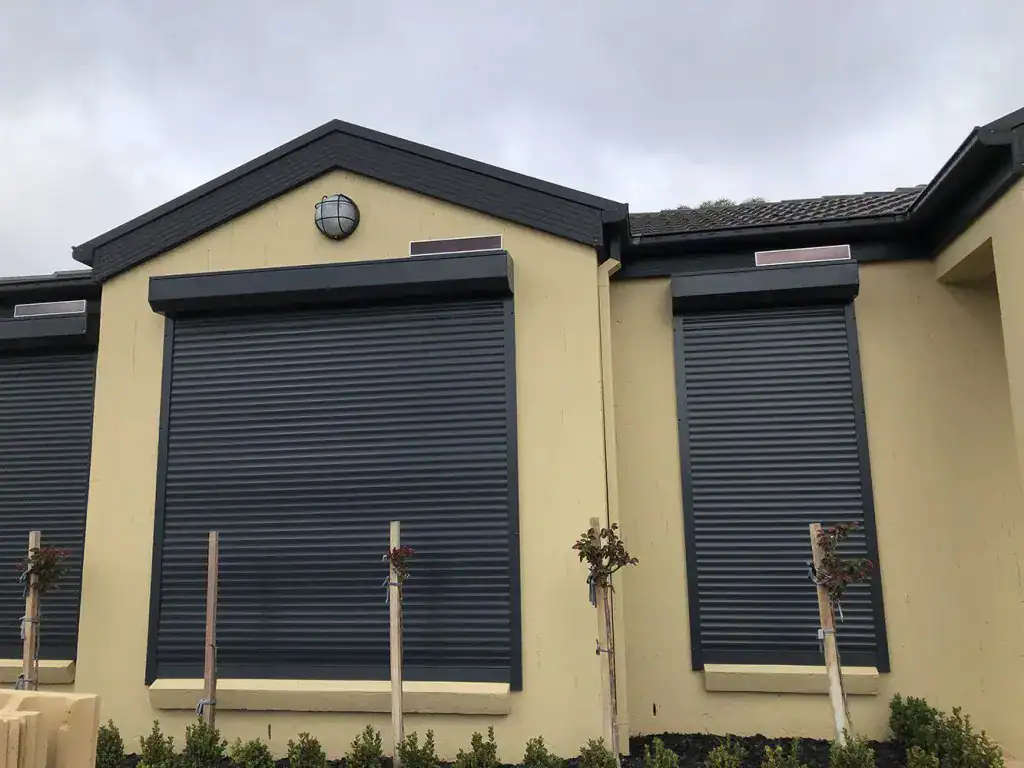
Roller shutters are a strong option where a business needs visible after-hours protection over shopfronts, service counters, loading areas or large glazed openings. They can help deter vandalism, reduce access to glass and shield premises from weather exposure.
The trade-off is appearance during closed hours and the space required for the shutter system. For street-facing businesses, the shutter style and finish should be chosen carefully to maintain a tidy presentation. Perforated or vision-style options can suit sites where some visibility is useful, while solid shutters provide more screening and privacy.
Motorised operation can make roller shutters easier to use, particularly for larger openings. However, any automated system should have appropriate safety features and a reliable override method. A shutter that cannot be operated when needed can disrupt trading as much as it affects security.
Security screens and protected glazing
Glazed entrances create an open, modern feel, but they can also be vulnerable if security has not been considered. Security screens can provide an added barrier while allowing natural light and airflow. They are particularly useful at entrances where ventilation is valuable or where a solid door would make a reception area feel closed in.
For properties with adjacent windows, security should be considered as a complete frontage. Protecting only the door can leave an obvious weak point beside it. Matching screens, doors and shutters can give the entrance a more considered finish while reducing opportunities for forced access.
Locks and access control that suit your team
A commercial lock should be selected for the people who use it, not simply for the door it is fitted to. A small business with two keyholders may be well served by high-quality mechanical locks and a clear key-control process. A larger workplace, shared office building or premises with changing staff may benefit from electronic access control.
Access cards, fobs, PIN pads and mobile-enabled systems can make it easier to manage permissions without collecting keys from every former employee. They can also limit access to certain doors or times of day. This can be especially useful where cleaners, contractors or delivery staff require restricted access.
Do not overlook gates and external approach points
The entrance security plan starts before someone reaches the front door. Automatic gates, pedestrian gates, slat fencing and privacy screens can control access to car parks, rear laneways, service yards and shared building entries. They also create a clearer boundary between public and private areas.
For warehouses, workshops and businesses storing equipment outdoors, a secure perimeter may be as important as the building entrance. Gates should be sized for the vehicles using them, fitted with suitable locking or automated controls, and positioned so they do not create traffic or pedestrian safety issues.
Privacy screens can help where a side entry, staff area or stock zone is easily visible from the street. While screening is not a substitute for a physical security barrier, reducing visibility of valuable items can lower temptation and improve the presentation of the site.
Balance security, compliance and customer experience
A commercial entrance must remain safe for authorised users. Fire egress, accessibility, emergency procedures and building requirements need to be considered whenever doors, locks or shutters are upgraded. For example, a door that is highly secure from the outside must still allow people to exit safely from inside where required.
Colour, frame style, glazing and screen design all contribute to the final result. Security hardware does not have to look industrial or out of place. Our locally manufactured products can be made to suit the dimensions and character of the property, helping protect the premises without compromising its appearance.
Choose products built for Canberra conditions
Canberra businesses contend with hot summers, cold winters, wind, rain and dust. Exterior doors, shutters and screens need finishes and components that can perform through these conditions, not just look good when first installed. Australian-standard products and quality installation provide greater confidence in long-term performance.
Protects your investment with regular care. Check that locks engage cleanly, hinges and closers operate properly, shutters travel without obstruction, and staff know how to use any access control or emergency override. Small faults are easier and less costly to address before they affect security or daily operations.
Argus Security supplies, manufactures and installs tailored entrance security products from Canberra, with solutions designed around the building, the business and the people who use it. Book a free on-site quote to clarify which combination of security doors, roller shutters, screens, locks and gates will provide the right level of protection.