

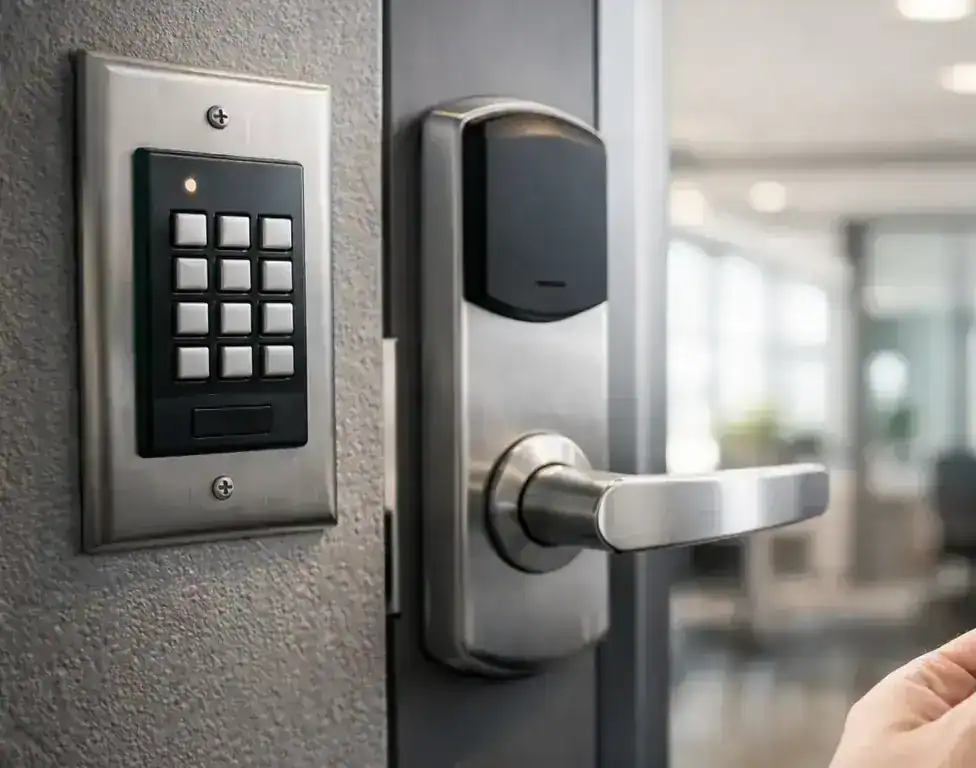
A forced rear door, an exposed side window or a gate that does not properly control access can create a weak point in an otherwise well-run business. This guide to commercial security hardware is designed to help Canberra and ACT property owners make practical decisions about physical protection, without turning their premises into an unwelcoming fortress. The right solution protects stock, staff and equipment while supporting privacy, presentation and day-to-day operations.
Why commercial security hardware needs a whole-property view
Commercial security is rarely solved by fitting one stronger lock. A locksmith-grade lock is valuable, but it cannot compensate for a lightweight door frame, an unprotected glazed entry, poor perimeter control or windows that are easily reached from a car park. The most effective installations consider how someone approaches the site, where they could gain entry and which areas need added protection after hours.
A café, medical practice, workshop, office, strata complex and home-based business all have different risks. A retail premises may need clear visibility and a welcoming frontage during trading hours, then strong protection for glass and stock overnight. A workshop may place greater value on securing tools, roller-door openings and vehicle access. Offices often need controlled entry to records, technology and staff-only areas.
This is why an on-site assessment from Argus is worthwhile. It allows us to select security hardware to suit the building’s construction, access patterns, exposure to weather and the way your team actually uses the space. Our experience helps you avoid leaving access points underprotected that you may have otherwise overlooked.
A guide to commercial security hardware by location
The best starting point is to look at each part of the property in order, from the boundary through to high-value internal areas. This approach makes it easier to build layers of protection that work together.
Perimeters, gates and external access
The perimeter sets the first boundary. Automatic gates, pedestrian gates, slat fencing and privacy screens can define where visitors, deliveries and contractors enter, while reducing casual access to yards, loading areas and side passages. For sites with vehicles, an automatic gate can also help manage who enters outside business hours without requiring a staff member to open and close it manually.
Gate hardware matters as much as the gate itself. Hinges, latches, locking points, automation controls and safety features must be suited to the weight and frequency of use. A gate that looks substantial but cannot be reliably locked is not providing the protection it should.
Entry doors, frames and locks
External doors are one of the most common pressure points on commercial premises. Security screen doors provide an added barrier while allowing airflow and visibility where appropriate, making them useful for front entries, rear doors and staff access points.
Locks should be selected for the door type and level of risk. Restricted-key systems can be useful where multiple staff members, tenants or contractors need access, as they provide greater control over key duplication. If keys are lost, staff change or a tenancy changes hands, reviewing access immediately is far less costly than dealing with a break-in.
Windows, screens and roller shutters
Windows can be attractive targets because they are often less visible than entry doors and may provide quick access to stock or equipment. Window security screens offer a practical option for offices, clinics and ground-floor commercial spaces that need ventilation and daylight without leaving an easy opening.
For shopfronts, storage areas and high-risk openings, roller shutters provide a more substantial physical barrier. They can help protect glass from forced entry, vandalism and harsh weather, while also improving privacy after hours. Depending on the shutter design and installation, they may assist with insulation and light control as well.
There is a trade-off to consider. A heavy, highly visible shutter can communicate strong security, but it may not suit every retail façade or heritage-style building. Security screens, discreet shutters and carefully selected colours can deliver protection while keeping the property professional and inviting.
Internal rooms, stock and valuables
Not every security measure belongs on the outside of the building. Internal lockable doors, secure storage and safes help contain loss if an outer layer is defeated or if access needs to be limited within the workplace. Cash, confidential documents, keys, portable devices and specialised tools should not be protected by a desk drawer alone.
A safe needs to be selected for its intended contents and installed correctly. Its size, locking method, fire rating where required and anchoring all matter. A small portable safe may suit low-value documents, while larger commercial safes are better suited to substantial cash holdings, records or high-value items. The location should be practical for authorised staff but not obvious to a visitor.
Build security in layers, not product by product
Physical security works best when each layer delays, deters or restricts unauthorised access. A well-planned commercial property might combine a controlled gate, secure external doors, window screens, quality locks and protected internal storage. The objective is not to make every surface identical. It is to ensure there is no easy route through the property.
Installation, standards and ongoing care
Even high-quality hardware can underperform when it is poorly fitted. Doors must align correctly, locks must engage fully, gates need appropriate clearances and shutters need reliable operation. Professional measurement and installation are especially important in older commercial buildings, where openings are rarely perfectly square and existing frames may need attention.
For commercial properties across Canberra, Argus Security can assess the layout, identify the weak points and recommend a made-in-Canberra combination of security products that suits the premises and budget. Our free on-site quote gives you a practical basis for deciding which improvements should come first.