

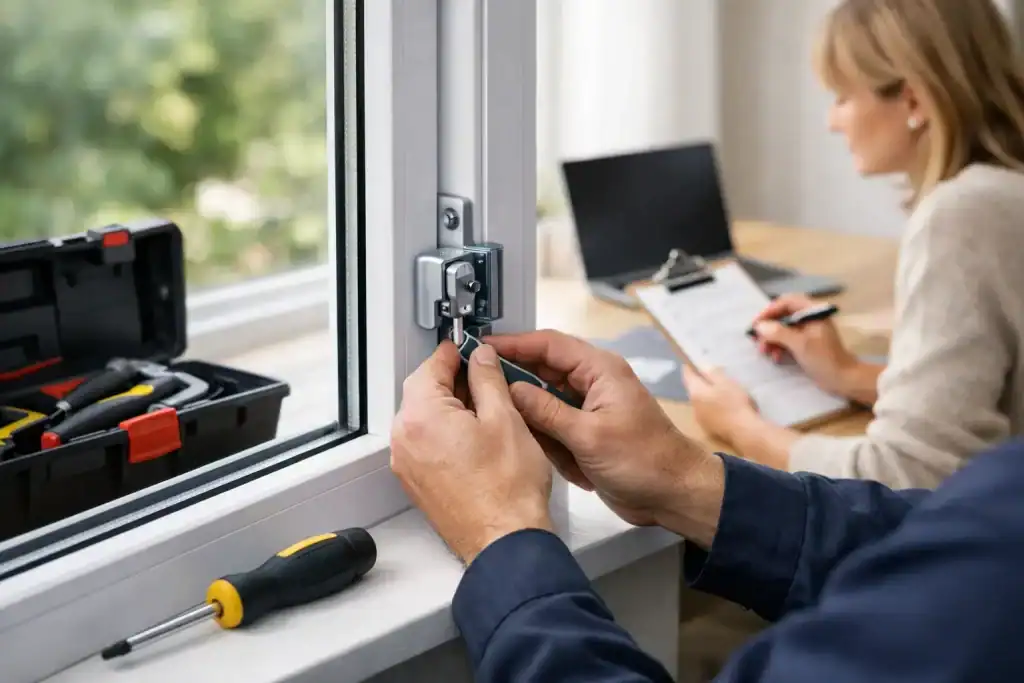
A window left slightly open for summer air can be an easy entry point when its lock is worn, poorly fitted or simply not designed for modern security expectations. This guide to window lock upgrades explains how Canberra homeowners and business owners can improve window protection without compromising ventilation, appearance or day-to-day convenience.
Window security is rarely about fitting the strongest lock available to every frame. The right approach depends on the window style, how the room is used, who needs to operate the window, and whether the property needs a broader security upgrade. A well-planned solution protects vulnerable openings while still allowing safe airflow and practical access.
Start with the windows that present the greatest risk
Not every window has the same security priority. Ground-floor windows, rear windows screened by fencing or landscaping, and windows near side access paths should be assessed first. These areas can be less visible from the street or neighbouring homes, giving an intruder more time to test a weak catch or force a frame.
Consider how each window is positioned and used. An upper floor window may need to open readily for ventilation and emergency exit. A small bathroom window may need privacy as well as a lock. Windows in an office, shopfront or storage area may require stronger protection outside business hours, particularly where stock or equipment is visible from outside.
It is also worth looking for less obvious weaknesses. A quality lock will not provide full protection if the frame is deteriorated, the sash is loose, the glass is damaged, or the window can be lifted from its track. Security works best when the lock, window frame, glazing and surrounding hardware are considered together.
Common window lock upgrades and where they suit
The right lock type should match the window rather than be selected as a one-size-fits-all product. Older properties across Canberra often have a mix of timber, aluminium and sliding windows, so a tailored recommendation is usually more effective than replacing every lock with the same model.
Keyed sash locks for hinged and awning windows
Keyed sash locks are commonly used on casement, awning and double-hung windows. They secure the moving section of the window to the frame and can make forced opening more difficult than a basic catch.
A key-operated lock is particularly useful on accessible windows, but key management matters. Keep keys available to responsible occupants and make sure they are not left in locks where they can be reached or broken through nearby glass.
Patio bolts and sliding window locks
Sliding windows can be vulnerable when their standard latches are worn or offer limited resistance. A purpose-made sliding window lock or patio bolt can restrict movement and help prevent the panel from being forced open or lifted out of its track.
Some systems allow the window to be secured in a partly open position. This can be a practical option for ventilation, especially during Canberra’s warmer months, but the opening must be small enough that a person cannot pass through it. The hardware should be fitted carefully so it does not damage the track or interfere with normal operation.
Restrictors for safe ventilation
Window restrictors are designed to limit how far a window can open. They are often chosen for upper-storey rooms, children’s bedrooms, rental properties and commercial premises where airflow is needed without allowing wide access.
A restrictor is not always a substitute for a high-security lock. Its main role is controlled opening and fall prevention. In many situations, the best result is a restrictor paired with a suitable lock or a security screen that lets the window remain open while adding a physical barrier.
Lockable security screens
For many homes, a lock upgrade is only one part of the solution. A quality security screen provides another barrier between the window and the outside, allowing ventilation without leaving the opening exposed. It can also improve privacy and reduce concern about leaving selected windows open while people are at home.
The screen, frame, fixing method and lock should be assessed as a complete system. A lightweight screen with a good lock may still be a weak point if it can be pulled away from the frame. Look for products designed and installed to relevant Australian Standards, with fittings suited to the specific window opening.
Choose security that works with daily life
A lock that is difficult to use tends to be left unlocked. That is why practical operation is as important as strength. Think about who opens the windows each day, whether the lock can be reached easily, and whether it can be operated without excessive force.
For family homes, consider ventilation routines, school pick-up times, holidays and overnight use. For a business, consider who holds keys, how opening and closing procedures work, and whether several staff members need access. If key control is a concern, locks can be selected as part of a broader master-key or restricted-key system, depending on the property’s needs.
Appearance should not be treated as an afterthought. Window hardware is visible inside and outside the property, particularly on street-facing windows. Modern lock options and security screens can be selected to complement existing window frames, shutters, doors and fencing, so security improvements feel like part of a considered renovation rather than an add-on.
Do not overlook glass, frames and installation
Locks are only as effective as what they are fixed into. A loose timber frame, corroded aluminium channel or misaligned sash can prevent a new lock from engaging properly.
Glass also changes the security conversation. Standard glazing may be appropriate in many locations, while more exposed areas can benefit from an additional physical barrier such as a security screen, roller shutter or privacy screen arrangement. The most suitable option depends on visibility, access, weather exposure and the level of protection required.
Professional installation is particularly valuable. Poorly installed hardware can bind, fail to latch, damage the frame or create a false sense of protection. A proper site assessment from Argus identifies these issues before products are selected.
Build window locks into a wider security plan
Window locks are most effective when they support the rest of the property’s physical security. An intruder who cannot force a window may try an unprotected side door, garage access point or rear gate instead. Looking at the whole property helps prioritise investment and avoid spending heavily in one area while leaving another clearly vulnerable.
For example, a home with accessible rear windows may benefit from lock upgrades combined with security screens and a secure side gate. A street-facing room may need privacy screening as well as a lock. A commercial property may require roller shutters for after-hours protection, with window locks providing an added internal layer.
Plantation shutters, external shutters and screens can contribute to privacy, glare control and weather protection while supporting security objectives. The best package is not necessarily the largest package. It is the one that addresses the real risks at the property and suits the way occupants live or work.
When to arrange a professional assessment
Argus can assess access points, recommend compatible hardware and explain where a security screen, shutter or upgraded lock will deliver the greatest value. Argus Security provides tailored advice and locally made security solutions for Canberra and ACT properties, with recommendations based on the layout, presentation and security needs of each site.
A well-chosen window lock upgrade should give you confidence without making your home or workplace harder to use.