

The front entrance does more than welcome staff and customers. It is where keys change hands, deliveries arrive, visitors wait and opportunistic intruders look for an easy weakness. Knowing how to improve business entry security starts with treating that opening as a complete system – not simply fitting a stronger lock to an ageing door.
For Canberra businesses, the right approach must also suit the building’s use, its street frontage and the people moving through it each day. A retail shop needs visibility and easy customer access. A warehouse may need to control vehicle entry and protect a wide loading area. A professional office needs a secure, presentable entrance that does not make legitimate visitors feel unwelcome.
Start with the way your entry is actually used
Walk around the property after hours as well as during normal trading. Consider sightlines from the road, nearby footpaths and car parks. A poorly lit recessed doorway can give someone privacy to tamper with hardware. A rear or side entrance hidden by bins, landscaping or stored stock can become the lower-risk option for an intruder.
A practical entry-security plan balances deterrence, delay and control. The goal is to make unauthorised access difficult, visible and time-consuming, while keeping day-to-day entry straightforward for authorised people.
How to improve business entry security with stronger barriers
The physical strength of the entry matters. Doors, frames, hinges, locks and glazing need to work together. Upgrading only one component can leave the weakest part of the assembly exposed.
Choose a door suited to the risk and location
A commercial entry door should be selected for more than its appearance. At Argus we consider its construction, frame strength, hinge arrangement and the way it closes. A door that flexes, has excessive gaps or does not latch firmly may be vulnerable even with good hardware fitted.
Security screen doors are a useful option where businesses need airflow, natural light or visibility without leaving an open doorway unprotected. They can be especially practical for customer-facing premises that open early, close late or need ventilation during warmer periods. The right design should complement the building rather than make it look closed-off during trading hours.
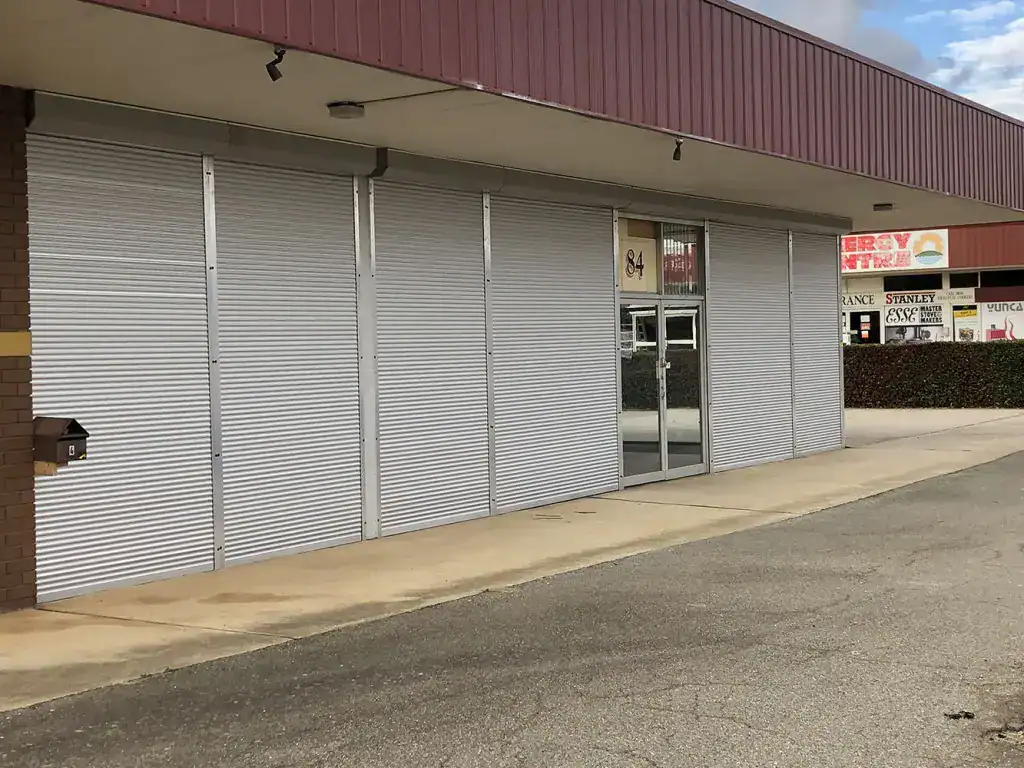
Roller shutters offer a visible physical barrier and can also help protect windows from weather exposure, but they may not suit every frontage where a softer visual finish is preferred.
Upgrade locks and protect the frame
Locks should be chosen for the door type and the level of control required. A business with one or two trusted operators may only need high-quality keyed locks with a clear key register. A larger team, changing roster or multiple tenancy arrangement may benefit from restricted keying or managed access hardware.
Do not overlook the strike plate, frame and fixings. When a door is forced, these points often take the pressure. Reinforced hardware and professional installation help transfer that force through a stronger assembly rather than allowing the lock area to split or pull away.
Hinges deserve the same attention, particularly on outward-opening doors. Security hinges or hinge bolts can prevent a door from being removed if hinge pins are accessible from outside. It is a small detail, but it can make a significant difference to a vulnerable entry.
Control access without slowing down your business
Security should support the way your team works. If procedures are too awkward, people find workarounds. That may mean leaving a door on latch, sharing keys between staff or failing to secure an entry at the end of a busy shift.
For businesses that receive regular deliveries, create a clear process for goods access. Delivery drivers should not need to wander through staff-only areas or wait at an unsecured rear entrance. A lockable gate, designated receiving point or controlled side entry can reduce confusion while allowing operations to continue efficiently.
Visitor access should also be intentional. If reception cannot always monitor the front door, consider how visitors announce themselves and where they wait. The answer may be as simple as repositioning a counter, improving visibility through a security screen or using a gate to separate public and staff areas.
Secure the perimeter around the entrance
Automatic gates are particularly useful for premises with vehicle access, storage yards or restricted staff parking. They provide controlled entry without requiring someone to manually open and close a gate in poor weather or after dark. However, the gate needs to suit the site. Sliding, swinging and pedestrian gate arrangements each have different space, safety and traffic-flow requirements.
Use professional measurement and installation
Security products only perform as intended when they are correctly specified and installed. Site conditions vary widely across Canberra commercial properties, particularly in older buildings where openings may be out of square, frames may have been altered and existing hardware may conceal damage. At Argus we like to measure accurately, inspect the surrounding structure and recommend products suited to the entry’s use.
Locally made, custom-fitted solutions can be particularly valuable where standard sizes leave gaps or compromise the finish. Argus Security provides on-site assessments and tailored security packages, helping business owners combine entry protection, access hardware and property presentation in one considered plan.