

A forced door, an unsecured rear window or a gate that is left open after hours can create a far bigger risk than most business owners expect. The right security hardware for businesses protects more than stock and equipment. It helps safeguard staff, control access, maintain privacy and present a professional face to customers from the street.
For Canberra businesses, the best result rarely comes from buying one lock or installing one screen. Premises differ. A showroom on a busy road, a warehouse in Hume, a medical practice and a home-based business all have different entry points, operating hours and security priorities. A considered combination of physical barriers, quality locks and practical access hardware provides stronger long-term protection than a one-size-fits-all fix.
Start with how your premises actually operate
Security should support the way your team, customers and deliveries move through the property. Before selecting products, look at the building from the outside after hours. Which doors, windows, side passages and loading areas are concealed from the road? Where is valuable stock stored? Who needs access early in the morning, late at night or on weekends?
This assessment often reveals weak points that are easy to overlook during a busy workday. The rear service door may have an old lock, a side gate may not latch properly, or ground-floor windows may be visible from a neighbouring car park. Security hardware works best when these points are treated as a connected system rather than separate jobs.
It is also worth considering whether the property needs to feel welcoming during trading hours. Heavy security does not have to make a business appear closed off or neglected. Well-designed doors, screens, shutters and fencing can improve privacy and protection while complementing the building’s appearance.
Security doors and screens for occupied premises
For many businesses, entry doors are the first priority. A quality security door provides a physical barrier at a main entrance, staff access point or rear doorway while allowing ventilation and visibility where needed. This can be particularly useful for offices, clinics, retail premises and workshops that want fresh air without leaving an open doorway vulnerable.
The frame, fixing method, mesh or grille design and lock are all important considerations. A strong door fitted to a weak frame, or paired with unsuitable hardware, will not deliver the protection expected. Products should be selected and installed to suit the opening, the building material and the level of use the door will receive.
Window security screens can offer similar benefits. They are well suited to ground-floor windows, reception areas, staff rooms and windows that need to remain open for airflow. In Canberra, where summer heat and winter ventilation needs can vary, screens can help balance comfort with security. The right finish and profile can also keep the exterior tidy rather than turning the façade into an afterthought.
Locks are only as good as their installation
Locks are often the smallest visible part of a security upgrade, but they are central to how a business controls access. Commercial-grade locks, deadlocks, restricted key systems and compatible door hardware can reduce the chance of unauthorised entry and make key management more straightforward.
The right choice depends on the door type and its purpose. A front customer entrance may need convenient day-to-day access, while a stockroom or rear door may require higher restriction. Businesses with staff turnover should also consider how easily keys can be tracked, recovered or reconfigured. Giving too many people unrestricted keys can undermine even a high-quality locking system.
There is an essential trade-off here: security must never interfere with safe emergency exit. Doors on evacuation paths require suitable egress hardware and must meet relevant building and fire safety requirements. This is one reason professional advice is valuable before changing locks, adding security doors or restricting access points.
Roller shutters for after-hours protection
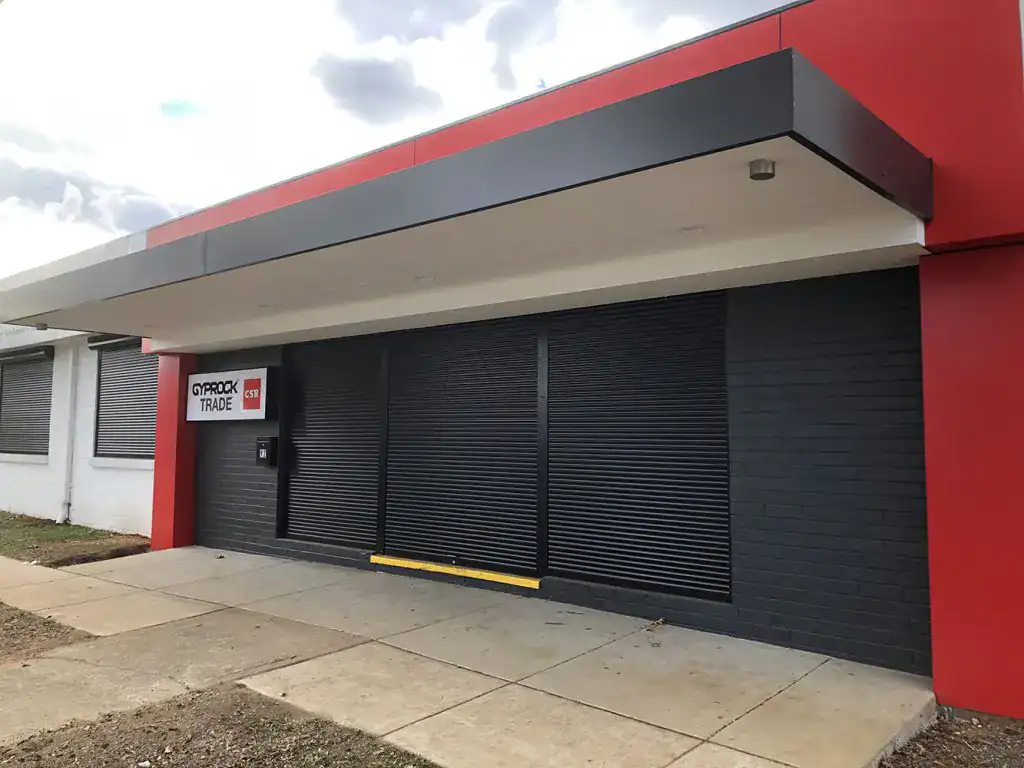
Roller shutters are a practical option for shops, commercial windows, counters, storage areas and premises with exposed glass. When closed, they create a highly visible deterrent and add a substantial barrier between the street and valuable stock. They can also protect glazing from weather exposure and, in some applications, reduce harsh sun and heat entering the building.
For a retail business, shutters can be particularly valuable where displays sit close to windows or where the premises is vacant overnight. For warehouses and workshops, they can secure larger openings that conventional doors do not cover as effectively.
However, roller shutters need to suit the daily routine. Manually operated shutters may be appropriate for smaller or infrequently used openings, while automatic operation can make sense where staff open and close the premises every day. The shutter should be correctly sized, securely fixed and maintained so it remains reliable when needed.
Gates, fencing and privacy screens create a stronger perimeter
Security begins before someone reaches the building. Automatic gates, pedestrian gates, slat fencing and privacy screens can define the boundary of a property and direct visitors towards the correct entrance. This is useful for trades businesses, depots, professional offices with rear parking, childcare-adjacent sites and businesses operating from larger residential-style blocks.
A gate can restrict vehicle access after hours and reduce opportunistic entry to yards where tools, materials or fleet vehicles are stored. Fencing can close off side access, while privacy screens reduce clear views into courtyards, storage zones and staff areas. Used together, these products make it harder for someone to assess what is available and where the easiest access point may be.
Front fencing and gates are prominent features of a commercial property, particularly for customer-facing businesses. Slat designs and carefully selected colours can provide privacy and security while keeping the entrance modern and approachable. The goal is not to make a premises look fortified. It is to make access deliberate, controlled and clearly managed.
Safes protect the assets that cannot be replaced easily
Cash is not the only reason a business may need a safe. Important documents, keys, backup devices, confidential records and small high-value items all deserve secure storage. A safe can be a sensible part of a broader security plan, especially where staff handle takings or the business keeps sensitive materials on site.
Size, fire rating, lock type and placement should be considered carefully. A small portable safe may be convenient, but it is not necessarily appropriate for a business with regular cash deposits or high-value equipment. Depending on the risk, a safe may need to be anchored and positioned away from obvious access routes.
It also helps to create clear internal procedures. Decide who can open the safe, when money is counted, how keys are stored and what happens when a manager is away. Hardware provides the barrier, but consistent routines are what prevent avoidable gaps.
Choosing security hardware for businesses as a package
The most effective security hardware for businesses is chosen around layers, or multiple overlapping measures. Perimeter controls such as gates and fencing slow access to the site. Security doors, screens and shutters protect the building itself. Locks, access hardware and safes control who can enter and what they can reach once inside.
Not every business needs every product. A street-facing café may benefit most from security doors, window screens and a secure rear exit. A trade supplier may prioritise automated gates, roller shutters and secure storage. A professional office may need discreet window security, upgraded locks and privacy screening that preserves a polished exterior.
Budget also affects the order of work. If a full upgrade is not practical at once, address the most exposed entry points first, then build the system over time. Quality installation should not be sacrificed for a lower upfront price. Poorly fitted hardware can create weak points, cause operational frustrations and cost more to correct later.
For Canberra property owners, Argus’ local manufacture and on-site assessment can simplify this process. We can assess the layout, recommend suitable products and provide a tailored package that considers security, appearance and everyday use. Where relevant, products should be selected to meet applicable Australian Standards and installed for the specific conditions of the premises.
A business premises should feel easy for authorised people to enter and difficult for everyone else. Call Argus today for a free on-site quote so we can turn a general concern into a practical plan for a safer, more presentable property.