

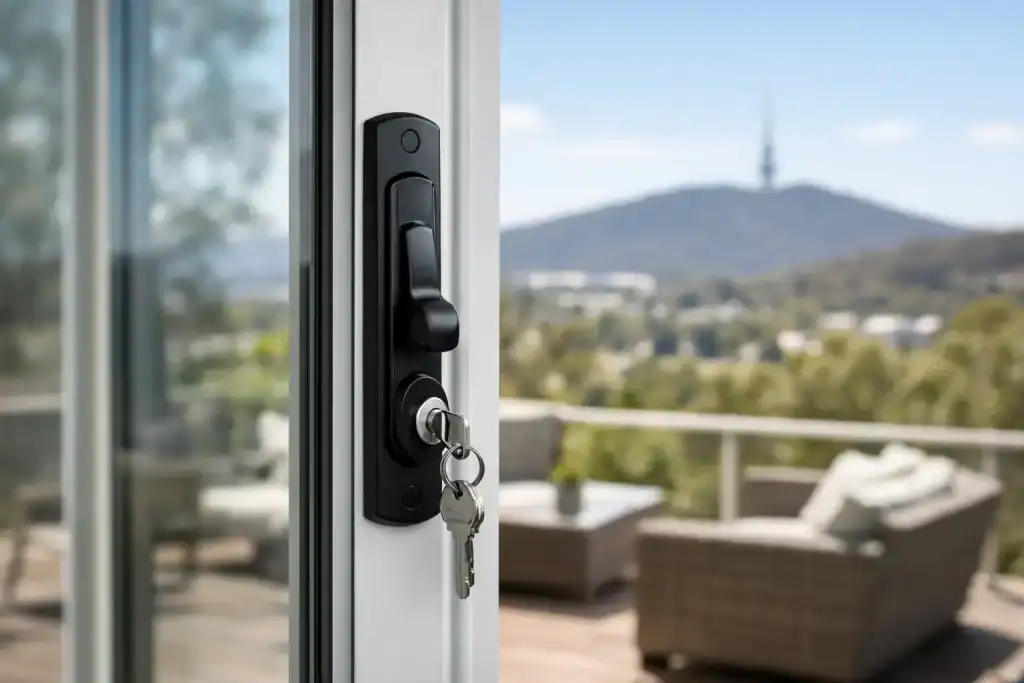
A sliding door can bring welcome light, garden access and an easy connection to an outdoor entertaining area. It can also be one of the more vulnerable openings on a property if the existing latch is worn, poorly fitted or simply not designed for the level of security required. The right sliding door lock solutions consider more than the lock itself. They account for the door frame, glass, track, access patterns and the wider security needs of your Canberra home or business.
A basic lock may be enough for a rarely used internal door, but a rear patio entrance, ground-floor apartment door or commercial access point deserves closer attention. The aim is to make forced entry more difficult while keeping the door practical, presentable and easy for authorised people to use.
Why standard sliding door locks can fall short
Many aluminium sliding doors are fitted with a simple hook-style latch. When new and correctly aligned, this can provide a useful first level of closure. Over time, however, door rollers can wear, frames can move slightly and the latch may no longer engage as deeply as it should. A lock that appears closed is not always providing meaningful resistance to lifting, prying or forcing.
The track is another consideration. A sliding panel can sometimes be lifted enough to disengage from its frame if there is excessive clearance or inadequate anti-lift protection. The glass itself may also be the weak point. Adding a stronger lock to an ageing door does not necessarily address a vulnerable frame, thin glazing or an exposed side panel.
This does not mean every sliding door needs to be replaced. It means the lock should be assessed as part of the complete opening. A tailored recommendation can often improve security without compromising the door’s appearance or daily convenience.
Sliding door lock solutions to consider
The best option depends on how the door is used, the condition of the existing joinery and the security level you need. For many homes, combining two forms of protection provides a better result than relying on one lock alone.
Keyed sliding door locks
A quality keyed lock can improve control over external access, particularly for rear doors, side entrances and rental properties. It allows the door to be locked from the outside and can provide a more dependable securing point than a basic internal latch.
Keyed locks suit properties where occupants want the option to leave through the sliding door and secure it behind them. They are also useful where a door opens to an unfenced courtyard, shared area or accessible side path. The main trade-off is convenience: keys need to be managed carefully, and the lock must be selected and fitted so it works smoothly with the existing door profile.
Patio bolts and auxiliary locks
A patio bolt, foot bolt or secondary locking device adds another point of resistance. These products can be particularly effective when installed low on the door or in a position that is difficult to reach from outside. They are often used alongside a primary keyed lock rather than as a replacement for it.
Auxiliary locks are a practical choice for doors that are mostly secured overnight or when the property is vacant. Some are less convenient for frequent use, so they are not always ideal as the only lock on a family’s main route to the backyard. Correct placement matters. A poorly positioned bolt can interfere with curtains, flyscreens, flooring or the normal operation of the door.
Anti-lift devices and track security
Because a sliding door moves within a track, preventing lift-out is a valuable part of the overall solution. Anti-lift blocks, correctly adjusted rollers and purpose-designed track devices can reduce the opportunity for a panel to be raised and removed from its frame.
A dowel or track bar is sometimes used as a temporary measure, but it is not a complete security strategy. It may prevent the door from opening when in place, yet it does not fix a weak latch, poor alignment or an easily accessible track. Professionally fitted hardware is generally more durable, more discreet and more suited to a door used every day.
Security screen doors for sliding openings
A security screen door creates a separate, lockable barrier in front of the glass door. This is one of the most effective upgrades for households that want airflow without leaving the main opening exposed. It lets you enjoy ventilation on a warm evening while maintaining a physical barrier between the home and the outside.
The quality of the screen, frame, fixings and lock all matter. A screen should be made to suit the opening, installed securely and chosen with the intended use in mind. For example, a high-traffic family door needs smooth operation and dependable locking, while a door facing a public area may require a higher level of forced-entry resistance.
Security screens also offer privacy and insect protection, depending on the mesh selected. This makes them a strong option for Canberra homes where security, comfort and the appearance of the façade all need to work together.
Roller shutters for higher-exposure areas
For properties with large glass sliding doors, street-facing access or extended periods of vacancy, roller shutters can add substantial protection. When closed, they create a physical layer outside the glazing and may also assist with privacy, weather protection and temperature control.
Roller shutters are not necessary for every doorway. They change how the opening is used and are best suited to situations where the added security and insulation benefits justify the investment. They can be especially worthwhile for holiday homes, commercial premises, vulnerable ground-floor areas and homes exposed to harsh afternoon sun.
Do not overlook the door frame
A quality lock cannot perform as intended if it is attached to a weak, damaged or misaligned frame. Before selecting hardware, inspect the condition of the sliding panel, rollers, jamb, strike area and glazing beads. Signs of concern include a door that drags, rattles in the frame, does not close squarely or has a latch that needs force to engage.
A considered security upgrade adds more than a lock
Argus Security provides made-in-Canberra security products and tailored advice for residential and commercial properties across the ACT. By looking at the full opening rather than selling a single lock in isolation, the right solution can protect your property while still complementing its style.
If your sliding door feels loose, the latch has become unreliable or you are unsure how well the opening would stand up to forced entry, arrange a professional assessment before the issue becomes urgent. A properly selected and installed lock solution can make everyday access easier to manage and give you greater confidence when the door is closed for the night.